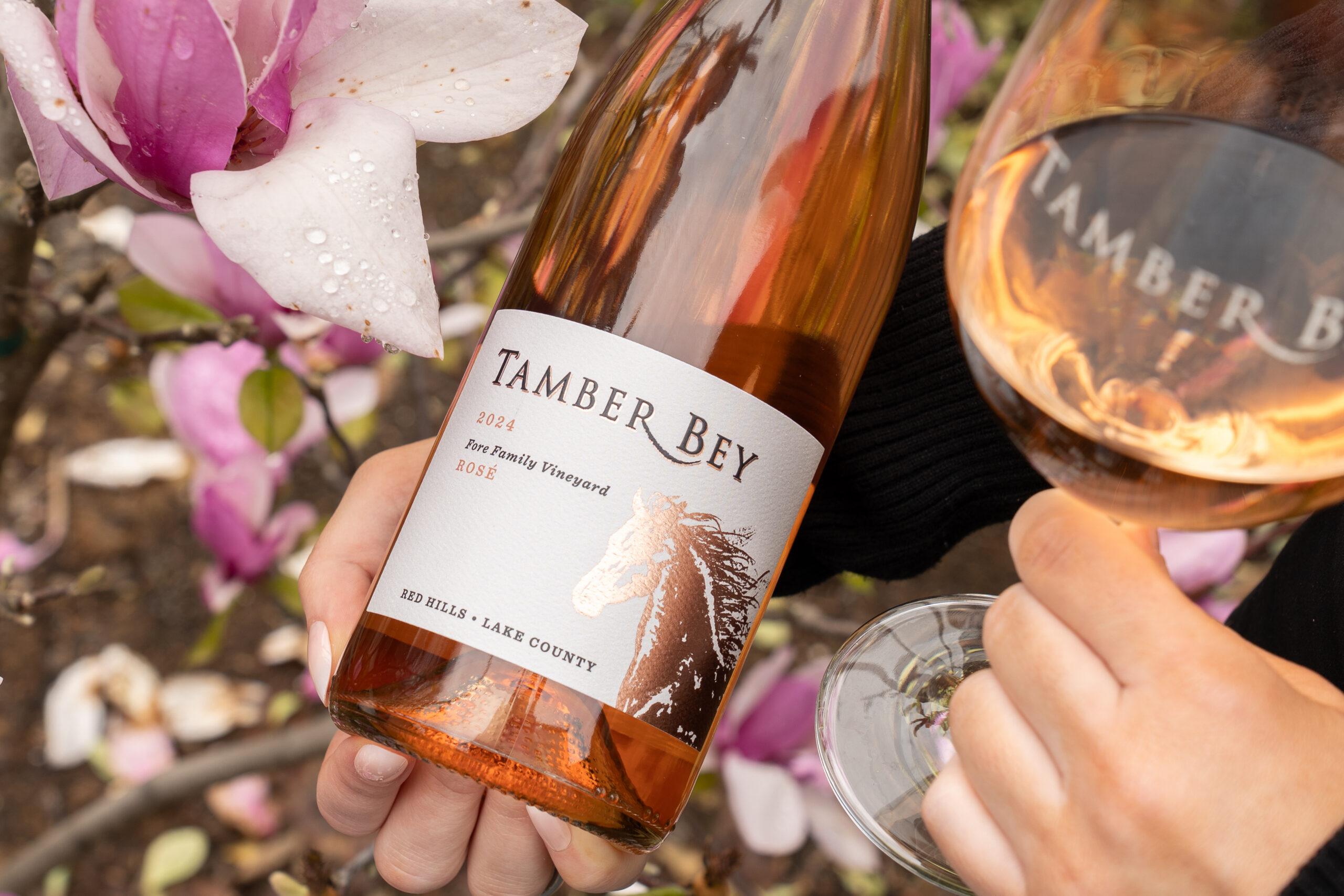
Rosé: The world of pink wine
Spring is in the air and the thought of rosé wines come to mind. In these warm and sunny days, it’s nice to have a picnic and drink this amazing wine, when reds feel too heavy and whites too acidic or boring. This is Calistoga Wine Society monthly newsletter where we share interesting facts about a wine style or wine varietal.
Although rosé wines can be made by mixing white and red wines (called the blending method that is forbidden in France, except for in the Champagne region), a true quality rosé wine should be initiated “from scratch.” There are then two ways to make professional quality rosé wines.
Skin contact method
The pink or rose color of the wines comes from skin contact during the winemaking process for red wine grape varieties. But to make rosé, exposure to the grape skin must be very short to impart some color, but not too much. Fermenting red grapes with the skins for only a few hours, instead of one-to-two weeks, and then pressing the grapes, will make wine with these lighter transitional shades of pink.
Based on the time of skin exposure during fermentation, the color can vary from the pale-orange-pink (almost white) to a more intense near-red color. The particular red winegrape being used for the rosé can also influence the final color. Pinot Noir, light red wine by itself, can make a rosé with a lighter shade of pink, while a rosé made of Sangiovese or Merlot, intensely dark wines, can make the wines a darker shade of pink.
The process is called “skin contact” or “direct press.” This method usually produces a Provence-style of rosé wines that is light, typically made in Provence, France, from Grenache, Cinsault and Mourvèdre varieties. “Blush” rosés on the other hand, are an American creation mainly made from the Zinfandel grape.
Saignée method
The other rosé winemaking process is called “saignée.” Pronounced “sohn-yay,” this French term translates to “to bleed,” and refers to the red juice that is removed from the tank of red grapes after crush and before fermentation. What’s left in the tank continues fermenting into red wine, with an increased skin-to-juice ratio. The resulting red wine is concentrated with a deep color. The juice that is removed is put into a separate tank and goes on to ferment to make rosé. The saignée method produces more intense, bold and robust flavors with mid-palate savory qualities and spice. These rosés are often made using bigger and bolder red wines, like Cabernet Sauvignon and Cabernet Franc.
Rosé wines can be made still, semi-sparkling, or sparkling and can vary in sweetness, from very dry rosé to sweet, like White Zinfandel, and everything in-between.
Rosé wines are made from a wide variety of grapes and can be found all around the globe. Usually, the wines are labelled rosé in French, Portuguese, and English-speaking countries, rosado in Spanish-speaking countries and rosato in Italian-speaking countries.
Food pairings
Rose wines can be served slightly chilled (50-55-degree Fahrenheit), and their pairings depends on the style of rosé being served. Rosé offers endless possibilities and experimentation with food dishes.
In general, rosé pairs perfectly with international, Mediterranean, and European cuisines with savory, sweet, sour and spicy flavors intermingled. Examples of suitable cuisines are Japanese dishes such as sushi, Chinese dishes, Italian pasta, Spanish tapas, Greek salads and Middle Eastern mezze.
More specifically, robust and fruity rosés can be paired lamb chops and grilled tuna. Semi-sweet and sweet rosé can be paired with spicy Mexican, Thai and Indian dishes and also pairs well with the sweetness of a good barbecue sauce. Sparkling rosé can be amazing with oysters, shrimp and cheese platters.
Regions
Some of the best rosé come from the Provence region of France, like Bandol and from Tavel, which is the southern Rhone region where only rosé wines are made. In the U.S., Oregon, Washington and California, also showcase beautiful rosé wines. California regions, like Santa Lucia Highlands, Santa Barbara, Russian River Valley and Sonoma Coast are well-known for quality rosé.
Local rosé wines that are excellent include La Sirena Rosato (rosé of Primitivo); Balletto (rosé of Pinot Noir); Blackbird Vineyards (rosé of Merlot and Cabernet Sauvignon); Smith-Madrone (rosé of Merlot and Cabernet Franc), Romeo (rosé of Petit Verdot), Lola (rosé of Pinot Noir), and Cliff Family (rosé of Cabernet Franc).
Next time you consider wine in the spring or summertime, or any time, consider a chilled bottle of rosé. Its delightful colors, refreshing taste, and remarkable adaptability make it an exceptional choice for any occasion.
—By Len Tolstunov, WSET3, Founder of the Calistoga Wine Society, Tribune contributor

Len Tolstunov became interested in wines and took a WSET educational wine course and passed level 3 with honors in 2016. Winemaking was the next adventure for Len and, after planting Cabernet Sauvignon vines in his front yard of their new house, Len started to make wine in 2018, learning from books and from many great home winemakers in town ready to help with any advice. In 2022 at the end of the pandemic, Len conceived the idea of the Wine Society for our town as a unifying force for those who loved wine and wanted to meet more neighbors as well as learn more about wine.